Post
Sustainable Fashion: Easy Ways to Build an Eco-Friendly Wardrobe
Jun
Sustainable Fashion: Easy Ways to Build an Eco-Friendly Wardrobe
Introduction
Sustainable fashion has evolved from a niche movement into one of the most important trends shaping the global fashion industry. As consumers become more aware of environmental issues, ethical production practices, and the impact of fast fashion, many are seeking ways to build wardrobes that align with their values while maintaining personal style.
The good news is that creating an eco-friendly wardrobe does not require sacrificing fashion, luxury, or individuality. In fact, sustainable fashion often encourages smarter purchasing decisions, higher-quality clothing, and timeless style that can save money in the long run.
Whether you’re just beginning your sustainability journey or looking to make your current wardrobe more environmentally conscious, this guide will provide practical and easy-to-implement strategies for building a stylish, sustainable wardrobe.
For inspiration from luxury brands that emphasize craftsmanship and longevity, visit:
What Is Sustainable Fashion?


Sustainable fashion refers to clothing, accessories, and fashion practices that minimize environmental impact and promote ethical production.
The concept focuses on:
- Reducing waste
- Conserving resources
- Supporting ethical labor practices
- Encouraging long-term garment use
- Minimizing pollution
- Promoting responsible consumption
Rather than constantly purchasing inexpensive trend-driven items, sustainable fashion encourages investing in quality pieces designed to last.
Why Sustainable Fashion Matters
The fashion industry is one of the world’s largest industries, but it also has a significant environmental footprint.
Common Challenges
- Textile waste
- Excessive water consumption
- Carbon emissions
- Overproduction
- Landfill accumulation
Consumers increasingly recognize that purchasing habits can influence industry practices and encourage more responsible production methods.
Benefits of Sustainable Fashion
- Reduced environmental impact
- Higher-quality clothing
- Long-term savings
- Timeless style
- More intentional shopping habits
1. Buy Less, Choose Better
One of the simplest sustainability principles comes from purchasing fewer but higher-quality items.
Why It Works
A well-made garment often lasts significantly longer than a cheaper alternative.
Focus On
- Durable fabrics
- Quality stitching
- Timeless silhouettes
- Versatile designs
Instead of buying five low-quality shirts, consider investing in one premium piece that can be worn for years.
2. Build a Capsule Wardrobe
A capsule wardrobe consists of versatile essentials that can be mixed and matched easily.
Benefits
- Fewer purchases
- Easier outfit planning
- Reduced clutter
- Greater versatility
Core Pieces
- White button-down shirt
- Black blazer
- Dark denim
- Neutral knitwear
- Tailored trousers
- Little black dress
- White sneakers
A capsule wardrobe emphasizes quality over quantity.
3. Choose Timeless Styles Over Fast Trends


Fashion trends change rapidly, often encouraging unnecessary consumption.
Timeless Pieces Include
- Trench coats
- Structured blazers
- Straight-leg jeans
- Leather loafers
- Neutral handbags
Classic styles remain relevant across multiple seasons and years.
Long-Term Value
Timeless garments often deliver a lower cost per wear because they remain fashionable longer.
4. Invest in Quality Accessories
Accessories often provide some of the best sustainability value in fashion.
Examples include:
- Chanel Classic Flap Bag
- Hermès Kelly
- Louis Vuitton Neverfull
Why Accessories Are Sustainable Investments
- Long lifespan
- Frequent use
- Timeless appeal
- Strong resale value
A quality handbag can remain part of a wardrobe for decades.
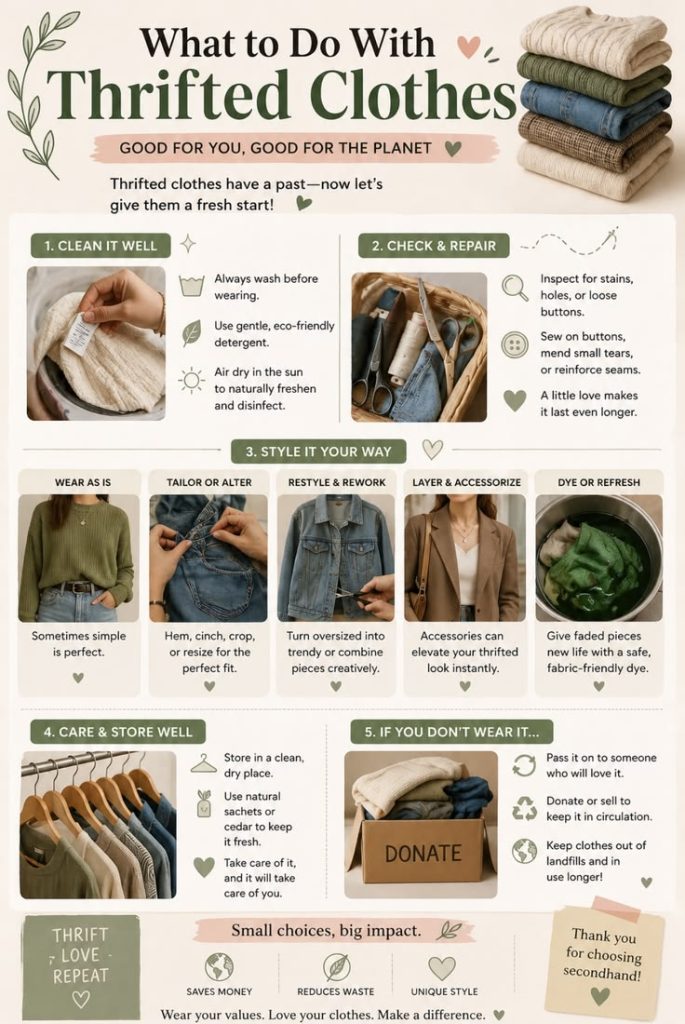
5. Shop Secondhand and Pre-Owned
The secondhand market has experienced tremendous growth in recent years.
Benefits
- Extends garment life cycles
- Reduces demand for new production
- Provides access to luxury items
- Often offers better value
Popular Categories
- Designer handbags
- Vintage clothing
- Watches
- Jewelry
- Outerwear
Shopping pre-owned is one of the most effective ways to reduce fashion waste.
6. Learn Basic Clothing Care


Proper care significantly extends garment lifespan.
Essential Practices
- Follow care labels
- Wash less frequently
- Air dry when possible
- Store garments properly
- Repair minor damage promptly
Benefits
Well-maintained clothing can remain wearable for many years.
7. Repair Instead of Replace
Small issues do not always require replacing a garment.
Common Repairs
- Loose buttons
- Minor tears
- Hem adjustments
- Zipper replacements
Learning simple repair skills can significantly reduce waste.
8. Prioritize Natural and Sustainable Fabrics
Certain fabrics generally have lower environmental impacts than synthetic alternatives.
Popular Choices
- Organic cotton
- Linen
- Hemp
- Wool
- Tencel
- Recycled materials
Advantages
- Durability
- Comfort
- Breathability
- Reduced environmental impact
Understanding fabric composition can help consumers make more informed purchasing decisions.
9. Support Brands Focused on Sustainability
Many brands are investing in:
- Ethical sourcing
- Reduced emissions
- Sustainable materials
- Transparent supply chains
What to Look For
- Sustainability reports
- Material transparency
- Ethical certifications
- Long-lasting products
Researching brands before purchasing helps support responsible business practices.
10. Create a One-In, One-Out Rule
A simple strategy for controlling wardrobe growth is the one-in, one-out approach.
How It Works
When purchasing a new item:
- Donate
- Sell
- Recycle
one existing item.
Benefits
- Reduces clutter
- Encourages thoughtful purchases
- Maintains wardrobe balance
This habit promotes intentional consumption.
Sustainable Fashion and Luxury Goods
Luxury fashion often aligns naturally with sustainability principles.
Why
Luxury brands typically emphasize:
- Superior craftsmanship
- Durable materials
- Repair services
- Long product life cycles
Well-maintained luxury pieces can remain relevant and functional for decades.
Cost Per Wear
Although initial costs may be higher, long-term usage often provides strong value.
How to Build an Eco-Friendly Wardrobe Step by Step
Step 1
Evaluate your current wardrobe.
Identify:
- Frequently worn items
- Rarely worn items
- Duplicates
Step 2
Define your personal style.
This reduces unnecessary purchases.
Step 3
Invest in versatile essentials.
Focus on:
- Neutral colors
- Timeless designs
- Quality construction
Step 4
Shop intentionally.
Before purchasing, ask:
- Will I wear this regularly?
- Can I style it multiple ways?
- Is it well made?
Step 5
Maintain and repair garments.
Extending product life is one of the most sustainable actions consumers can take.
Common Sustainable Fashion Mistakes
Buying Sustainable Products Excessively
Overconsumption remains problematic regardless of material.
Ignoring Clothing Care
Even sustainable garments require proper maintenance.
Following Every Eco Trend
Focus on practical habits rather than marketing claims.
Replacing Everything Immediately
The most sustainable clothing is often what you already own.
The Future of Sustainable Fashion
Several developments continue to shape the industry:
- Circular fashion systems
- Recycling technologies
- Resale marketplaces
- Sustainable materials innovation
- Digital supply chain transparency
Consumers increasingly prioritize durability, quality, and ethical production when making purchasing decisions.
Conclusion
Building an eco-friendly wardrobe does not require a complete lifestyle transformation. Simple actions such as buying fewer high-quality pieces, shopping secondhand, caring for garments properly, and choosing timeless styles can significantly reduce environmental impact while enhancing personal style.
Sustainable fashion is ultimately about making thoughtful choices. By focusing on quality, longevity, versatility, and responsible consumption, you can create a wardrobe that reflects both your aesthetic preferences and your commitment to a more sustainable future.
The journey toward sustainable fashion begins with small steps, and every mindful purchase contributes to a more responsible and environmentally conscious fashion industry.
