Post
How to Mix and Match Accessories Like a Professional Stylist
Jun
How to Mix and Match Accessories Like a Professional Stylist
Introduction
Accessories are often the secret ingredient behind the most memorable outfits. While clothing forms the foundation of your look, accessories bring personality, balance, texture, and sophistication. Professional stylists understand that the right combination of jewelry, handbags, scarves, belts, shoes, sunglasses, and watches can transform even the simplest outfit into a polished fashion statement.
However, mastering the art of mixing and matching accessories requires more than simply adding multiple pieces to an outfit. It involves understanding color coordination, proportions, textures, metals, and overall visual balance. When done correctly, accessories work together harmoniously to create a cohesive and stylish appearance.
In this comprehensive guide, you’ll learn professional stylist techniques for mixing and matching accessories while maintaining elegance, versatility, and timeless appeal.
For inspiration from some of the world’s leading luxury fashion houses, visit:
Why Accessories Matter More Than You Think


Many fashion professionals believe accessories can have a greater visual impact than clothing itself.
Accessories help:
- Define personal style
- Add sophistication
- Create focal points
- Balance proportions
- Refresh existing wardrobes
- Increase outfit versatility
A simple outfit can look entirely different depending on the accessories chosen.
For example:
- White shirt + jeans + sneakers = casual
- White shirt + jeans + luxury handbag + gold jewelry = sophisticated chic
The clothing remains the same, but the overall impression changes dramatically.
1. Start with a Focal Point
One of the most important stylist secrets is choosing a focal point.
What Is a Focal Point?
A focal point is the accessory that naturally draws attention first.
Examples include:
- Statement necklace
- Designer handbag
- Bold earrings
- Luxury watch
- Colorful scarf
Why It Matters
Without a focal point, accessories may compete against each other, creating visual clutter.
Professional Rule
Choose one dominant accessory and allow supporting pieces to complement rather than compete.
2. Follow the Rule of Balance
Professional stylists constantly think about visual balance.
If Your Jewelry Is Bold
Keep other accessories simple.
Example:
- Statement earrings
- Minimal necklace
- Neutral handbag
If Your Handbag Is Bold
Choose understated jewelry.
Example:
- Bright handbag
- Delicate bracelet
- Small earrings
Balance creates elegance.
3. Coordinate Colors Strategically


Color coordination is one of the easiest ways to achieve a polished look.
Classic Color Pairings
| Outfit Color | Best Accessory Colors |
|---|---|
| Black | Gold, silver, camel |
| Navy | Silver, white, beige |
| White | Tan, brown, gold |
| Beige | Cream, camel, gold |
| Gray | Silver, black, white |
Stylist Tip
Repeat a color at least twice throughout your outfit.
Example:
- Brown belt
- Brown shoes
- Brown handbag
This creates harmony and intentional styling.
4. Learn How to Mix Metals Properly
For years, fashion rules suggested never mixing gold and silver jewelry.
Today, professional stylists often mix metals intentionally.
How to Do It Correctly
Choose one dominant metal:
- 70% gold
- 30% silver
or
- 70% silver
- 30% gold
Use Transitional Pieces
Jewelry containing both gold and silver tones helps unify the look.
Mixed metals can appear modern and sophisticated when done thoughtfully.
5. Combine Different Textures
Texture adds visual depth and luxury.
Popular Texture Combinations
- Leather handbag + silk scarf
- Knit sweater + gold jewelry
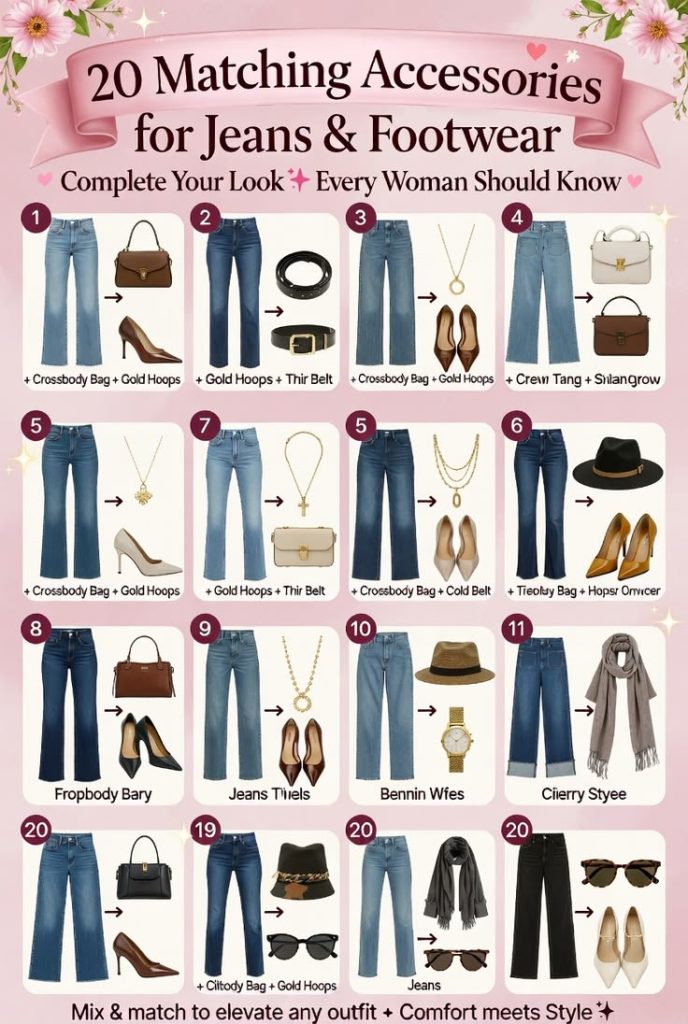
- Denim + structured leather belt
- Satin dress + metallic accessories
Why Texture Matters
Outfits become more interesting without requiring additional colors or patterns.
Professional stylists frequently use texture to create dimension.
6. Master Jewelry Layering


Layering jewelry is one of the most effective styling techniques.
Layered Necklace Formula
Start with:
- Choker or short necklace
- Mid-length chain
- Longer pendant
Ring Stacking Tips
Mix:
- Thin bands
- Statement rings
- Textured designs
Bracelet Layering
Combine:
- Watch
- Thin bracelets
- Delicate chains
Avoid making every piece oversized.
7. Match Accessories to the Occasion
Even perfectly coordinated accessories can feel inappropriate if they don’t suit the setting.
Professional Environment
Recommended:
- Minimal jewelry
- Structured handbag
- Classic watch
Casual Weekend
Recommended:
- Crossbody bag
- Sunglasses
- Simple jewelry
Evening Event
Recommended:
- Statement earrings
- Elegant clutch
- Heels
The most stylish outfits always consider context.
8. Understand Scale and Proportion
Accessories should complement your body type and outfit proportions.
Petite Frames
Best options:
- Smaller handbags
- Delicate jewelry
- Narrow belts
Taller Frames
Can comfortably wear:
- Oversized handbags
- Chunky jewelry
- Wider belts
Proper proportions create visual harmony.
9. Invest in Versatile Luxury Pieces
Certain accessories work across countless outfits.
Popular examples include:
- Chanel Classic Flap Bag
- Hermès Kelly
- Louis Vuitton Neverfull
These timeless accessories remain relevant because they pair effortlessly with diverse wardrobes.
Why Stylists Love Versatile Pieces
- Easy coordination
- Long-term value
- Timeless appeal
- Strong cost-per-wear
10. Follow the “Remove One Thing” Rule
One of the most famous styling principles comes from fashion icons who believed less is often more.
Before Leaving
Look in the mirror and evaluate:
- Jewelry
- Bags
- Scarves
- Belts
- Sunglasses
If the outfit feels crowded, remove one item.
The result often appears more polished and intentional.
Accessory Formulas Used by Professional Stylists
Casual Chic Formula
- White shirt
- Blue jeans
- Structured handbag
- Gold necklace
- Loafers
Result:
Effortlessly sophisticated.
Business Professional Formula
- Tailored blazer
- Watch
- Leather tote
- Stud earrings
Result:
Professional and refined.
Evening Glamour Formula
- Little black dress
- Statement earrings
- Clutch bag
- Heels
Result:
Elegant and timeless.
Common Accessory Mistakes to Avoid
Overaccessorizing
Too many statement pieces create visual confusion.
Ignoring Color Harmony
Random color combinations may appear uncoordinated.
Wearing Trendy Pieces Exclusively
Balance trends with timeless classics.
Matching Everything Exactly
Modern styling often benefits from subtle variation rather than perfect matching.
Building a Stylist-Approved Accessory Collection
Every wardrobe should include:
Jewelry
- Stud earrings
- Hoop earrings
- Layering necklace
- Bracelet
Bags
- Structured handbag
- Crossbody bag
- Evening clutch
Shoes
- White sneakers
- Loafers
- Heels
Additional Essentials
- Silk scarf
- Sunglasses
- Watch
- Leather belt
These pieces provide endless styling possibilities.
Why Professional Stylists Prioritize Accessories
Stylists understand that accessories offer one of the highest returns on investment in fashion.
Benefits include:
- Increased outfit versatility
- Greater wardrobe flexibility
- Improved personal style
- Better visual balance
- More sophisticated appearance
Rather than purchasing countless clothing items, many stylists recommend investing in a carefully curated accessory collection.
Conclusion
Learning how to mix and match accessories like a professional stylist is one of the most effective ways to elevate your personal style. By focusing on balance, proportion, color coordination, texture, and versatility, you can transform simple outfits into polished and sophisticated ensembles suitable for any occasion.
The key is intentionality. Choose a focal point, coordinate thoughtfully, layer strategically, and avoid overaccessorizing. Whether you’re styling a casual weekend outfit, a professional work look, or an elegant evening ensemble, the right accessories can make all the difference.
Fashion trends will come and go, but mastering accessory styling is a timeless skill that will continue to enhance your wardrobe for years to come.
