Post
How to Build an Effective Daily Skincare Routine
Jun
How to Build an Effective Daily Skincare Routine
Introduction
Healthy, radiant skin is not achieved overnight. It is the result of consistent care, proper product selection, and a skincare routine designed to meet your skin’s unique needs. With thousands of skincare products available on the market, many people feel overwhelmed when trying to build an effective daily skincare routine. However, achieving healthier skin does not require dozens of products or complicated steps. The key lies in understanding your skin type, choosing evidence-based ingredients, and following a simple, consistent regimen.
A well-structured skincare routine can help maintain hydration, strengthen the skin barrier, reduce signs of aging, minimize breakouts, and protect against environmental damage. Whether you have oily, dry, combination, sensitive, or normal skin, a personalized daily routine can significantly improve your skin’s appearance and overall health.
Trusted skincare brands such as CeraVe, La Roche-Posay, Paula’s Choice, The Ordinary, and SkinCeuticals have helped popularize science-backed skincare routines that focus on long-term skin health rather than short-lived trends.
This comprehensive guide will explain how to build an effective daily skincare routine that delivers visible and sustainable results.

Why a Daily Skincare Routine Matters
Your skin is constantly exposed to factors that can affect its health and appearance.
These include:
- Sun exposure
- Pollution
- Dirt and oil buildup
- Stress
- Climate changes
- Lifestyle habits
A consistent skincare routine helps:
- Maintain skin balance
- Prevent premature aging
- Improve hydration
- Support skin barrier function
- Reduce breakouts
- Enhance overall complexion
Even a simple routine can provide significant benefits when followed consistently.
Step 1: Understand Your Skin Type
Before choosing products, identify your skin type.
Normal Skin
Characteristics:
- Balanced hydration
- Minimal sensitivity
- Few imperfections
- Smooth texture
Most skincare products are generally suitable for this skin type.
Oily Skin
Characteristics:
- Excess shine
- Enlarged pores
- Frequent blemishes
- Increased oil production
Lightweight and non-comedogenic products are often preferred.
Dry Skin
Characteristics:
- Tightness
- Flaking
- Rough texture
- Reduced natural oils
Hydrating and barrier-supportive products are especially important.
Combination Skin
Characteristics:
- Oily T-zone
- Dry or normal cheeks
- Mixed concerns
Balanced formulations work best.
Sensitive Skin
Characteristics:
- Redness
- Irritation
- Reactivity
- Discomfort after product use
Gentle, fragrance-free products are typically recommended.
The Core Components of a Daily Skincare Routine
An effective routine generally consists of four essential steps:
- Cleansing
- Treatment
- Moisturizing
- Sun protection
These steps form the foundation of healthy skincare.
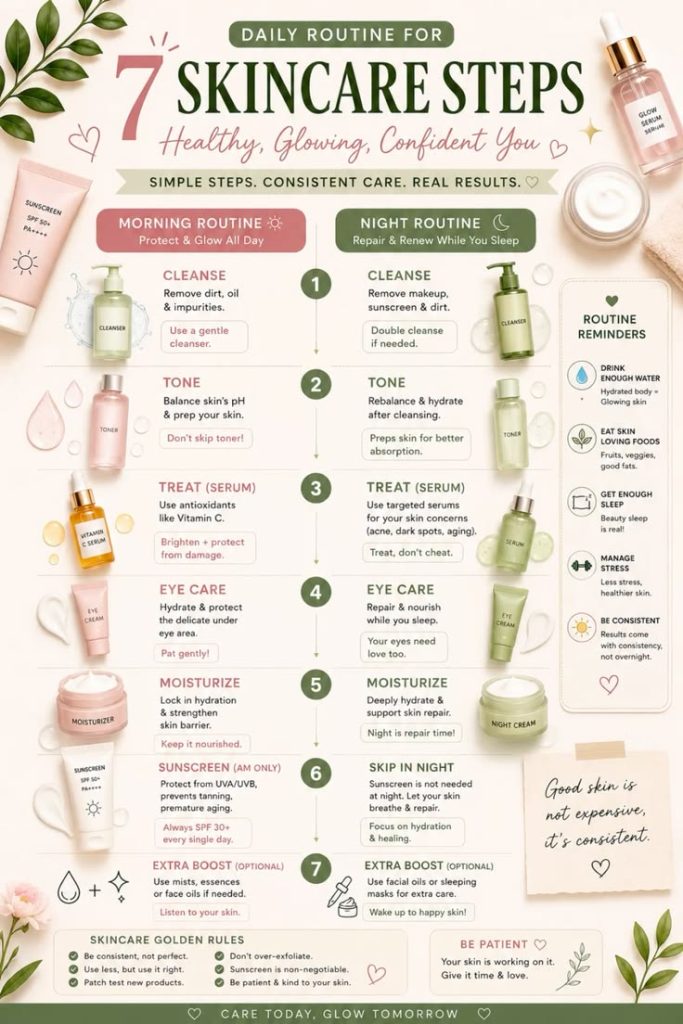
Morning Skincare Routine
Morning skincare focuses on protection and preparation for the day ahead.
Step 1: Cleanser
Start your day with a gentle cleanser.
A cleanser removes:
- Excess oil
- Sweat
- Overnight product residue
- Environmental particles
Choose Based on Skin Type
Oily Skin
Gel or foaming cleansers.
Dry Skin
Cream or hydrating cleansers.
Sensitive Skin
Gentle, non-irritating formulas.
Avoid harsh cleansers that leave skin feeling tight or stripped.

Step 2: Serum or Treatment Product
Serums contain concentrated active ingredients that target specific concerns.
Popular Morning Ingredients
Vitamin C
Benefits:
- Brightens skin
- Supports collagen production
- Provides antioxidant protection
Niacinamide
Benefits:
- Improves skin barrier
- Reduces redness
- Helps regulate oil production
Choose treatments based on your individual skincare goals.
Step 3: Moisturizer
Moisturizing is essential for every skin type.
Benefits include:
- Hydration
- Barrier support
- Improved comfort
- Reduced moisture loss
Important Moisturizing Ingredients
- Ceramides
- Hyaluronic acid
- Glycerin
- Squalane
A properly hydrated skin barrier functions more effectively.
Step 4: Sunscreen
Sunscreen is arguably the most important step in any skincare routine.
Benefits
- Protection from UV damage
- Reduced risk of premature aging
- Prevention of hyperpigmentation
- Support for overall skin health
Use broad-spectrum sun protection daily, even on cloudy days.
Consistent sunscreen use is one of the most effective anti-aging strategies available.
Evening Skincare Routine
Nighttime skincare focuses on cleansing, repair, and recovery.
Step 1: Cleanse Thoroughly
Evening cleansing removes:
- Sunscreen
- Makeup
- Oil
- Dirt
- Environmental pollutants
Many people benefit from double cleansing.
Double Cleansing Method
First Cleanse
Oil-based cleanser.
Second Cleanse
Water-based cleanser.
This method helps ensure a thoroughly clean complexion.
Step 2: Targeted Treatment Products
Nighttime is an ideal opportunity to use active ingredients that support skin renewal.
Popular Evening Ingredients
Retinol
Benefits:
- Improves skin texture
- Reduces fine lines
- Supports collagen production
Salicylic Acid
Benefits:
- Clears pores
- Helps manage acne
- Controls excess oil
Azelaic Acid
Benefits:
- Improves skin tone
- Reduces redness
- Supports clearer skin
Introduce active ingredients gradually to minimize irritation.
Step 3: Moisturizer
Apply a nourishing moisturizer to support overnight recovery.
Nighttime moisturizers often focus on:
- Barrier repair
- Hydration
- Skin recovery
Consistent moisturizing helps maintain healthy skin function.
Optional Skincare Steps
While not mandatory, some additional products can complement your routine.
Exfoliation
Exfoliation removes dead skin cells and improves texture.
Types
Physical Exfoliation
Uses particles to manually remove dead skin.
Chemical Exfoliation
Uses acids such as:
- Glycolic acid
- Lactic acid
- Salicylic acid
Most people benefit from exfoliating one to three times per week.
Avoid excessive exfoliation.
Face Masks
Masks can provide temporary benefits such as:
- Hydration
- Brightening
- Oil control
They are best used as supplementary treatments.
Eye Creams
Eye creams may help address:
- Dryness
- Puffiness
- Fine lines
Although optional, some individuals find them beneficial.
Building a Routine Based on Skin Concerns
For Acne-Prone Skin
Focus on:
- Gentle cleansing
- Salicylic acid
- Niacinamide
- Lightweight moisturizers
- Daily sunscreen
Avoid overly aggressive products.
For Dry Skin
Prioritize:
- Hydrating cleansers
- Ceramides
- Hyaluronic acid
- Rich moisturizers
Maintaining barrier function is essential.
For Aging Concerns
Consider:
- Vitamin C
- Retinol
- Peptides
- Sunscreen
Prevention and consistency are key.
For Hyperpigmentation
Helpful ingredients include:
- Vitamin C
- Azelaic acid
- Retinol
- Glycolic acid
Sun protection remains critical.
Common Skincare Mistakes to Avoid
Using Too Many Products
More products do not necessarily produce better results.
Changing Products Too Frequently
Most skincare ingredients require time to demonstrate effectiveness.
Skipping Sunscreen
UV exposure remains one of the leading causes of premature skin aging.
Over-Exfoliating
Excessive exfoliation may damage the skin barrier.
Ignoring Patch Testing
Always test new products before applying them to the entire face.
Avoiding these mistakes can significantly improve results.
How Long Does It Take to See Results?
Patience is essential in skincare.
Approximate Timelines
Hydration Improvements
A few days to two weeks.
Acne Management
Four to twelve weeks.
Hyperpigmentation
Two to six months.
Anti-Aging Benefits
Several months of consistent use.
Visible improvements often require long-term commitment.
The Importance of Consistency
Consistency is often more important than purchasing expensive products.
A simple routine followed daily is usually more effective than a complicated routine performed inconsistently.
Focus on:
- Daily cleansing
- Moisturizing
- Sun protection
- Appropriate treatment products
Long-term habits produce long-term results.
The Future of Personalized Skincare
Technology continues to transform skincare.
Emerging innovations include:
- AI-powered skin analysis
- Personalized formulations
- Digital consultations
- Ingredient customization
These developments may help consumers build even more effective skincare routines in the future.
Conclusion
Building an effective daily skincare routine does not require dozens of products or an extensive budget. The most successful routines are based on understanding your skin type, selecting evidence-based ingredients, and maintaining consistency over time.
A strong skincare foundation includes cleansing, moisturizing, targeted treatments, and daily sun protection. Whether your goal is clearer skin, improved hydration, reduced signs of aging, or a more radiant complexion, following a structured routine can help you achieve healthier skin in a sustainable way.
Inspired by science-backed approaches promoted by brands such as CeraVe, La Roche-Posay, and SkinCeuticals, the best skincare routine is one that is simple, personalized, and realistic to maintain. With patience, consistency, and the right products, healthier and more resilient skin is within reach for everyone.
