Post
The Benefits of Natural and Organic Beauty Products
Jun
The Benefits of Natural and Organic Beauty Products
Introduction
In recent years, consumer interest in natural and organic beauty products has grown dramatically. As people become more conscious of what they apply to their skin, hair, and body, many are seeking alternatives to conventional beauty products that contain synthetic ingredients. This shift has fueled the rapid expansion of the natural beauty industry, with brands around the world introducing products formulated with plant-based extracts, botanical oils, naturally derived ingredients, and environmentally responsible production methods.
Natural and organic beauty products are often associated with clean beauty, sustainability, and holistic wellness. While conventional cosmetics continue to play an important role in the beauty market, many consumers appreciate the appeal of products that emphasize ingredient transparency, eco-friendly practices, and naturally sourced components.
Leading beauty brands such as Dr. Hauschka, Weleda, Tata Harper, Juice Beauty, and Origins have helped popularize natural and organic beauty by focusing on plant-based ingredients and sustainable product development.
This comprehensive guide explores the benefits of natural and organic beauty products, how they differ from conventional cosmetics, and why they continue to attract consumers worldwide.

What Are Natural Beauty Products?
Natural beauty products are typically formulated with ingredients derived from natural sources.
These ingredients may include:
- Plant extracts
- Botanical oils
- Natural minerals
- Flower waters
- Fruit extracts
- Naturally sourced butters
Natural products generally emphasize ingredients obtained from nature rather than purely synthetic compounds.
However, the term “natural” does not always have a universally regulated definition, making it important for consumers to review ingredient lists carefully.
What Are Organic Beauty Products?
Organic beauty products contain ingredients grown and processed according to established organic agricultural standards.
Organic farming generally emphasizes:
- Reduced pesticide use
- Sustainable farming methods
- Soil health preservation
- Environmental responsibility
Certified organic ingredients often come from plants cultivated without many conventional agricultural chemicals.
Although standards vary across regions, organic certification can provide consumers with additional assurance regarding ingredient sourcing.
Why Consumers Are Choosing Natural Beauty Products
Several factors contribute to the growing popularity of natural and organic cosmetics.
Consumer Motivations
- Ingredient transparency
- Environmental awareness
- Interest in wellness
- Sustainable purchasing habits
- Preference for plant-based ingredients
As consumers become more educated about skincare and beauty, they increasingly seek products aligned with their personal values and lifestyles.
Benefit 1: Plant-Based Ingredients Rich in Nutrients
Many natural beauty products contain botanical ingredients that naturally provide beneficial compounds.
Examples include:
Aloe Vera
Known for its soothing and hydrating properties.
Green Tea Extract
Contains antioxidant compounds that help protect the skin.
Rosehip Oil
Popular for supporting skin hydration and improving appearance.
Chamomile Extract
Often used to help calm sensitive skin.
These naturally derived ingredients contribute to the appeal of many natural beauty formulations.
Benefit 2: Greater Ingredient Transparency
Many natural and organic beauty brands prioritize transparency.
Consumers often appreciate clear labeling that identifies ingredient sources and product composition.
Transparency Can Include
- Ingredient origin information
- Sustainability practices
- Manufacturing details
- Ethical sourcing initiatives
This openness helps consumers make more informed purchasing decisions.
Benefit 3: Environmental Sustainability
Sustainability has become a major consideration in the beauty industry.
Many natural and organic brands emphasize environmentally responsible practices.
Common Sustainability Efforts
- Recyclable packaging
- Renewable ingredients
- Ethical sourcing
- Reduced environmental impact
- Responsible farming methods
Consumers who prioritize environmental stewardship often view these initiatives positively.
Benefit 4: Support for Eco-Conscious Lifestyles
Natural beauty products often align with broader lifestyle preferences.
Many consumers interested in:
- Sustainable living
- Wellness
- Mindful consumption
- Environmental responsibility
find that natural beauty products complement their personal values.
This alignment contributes to the continued growth of the natural beauty sector.
Benefit 5: Botanical Oils for Skin Nourishment
Natural beauty formulations frequently incorporate plant oils that help support skin hydration and comfort.
Popular examples include:
Jojoba Oil
Provides lightweight moisture.
Argan Oil
Known for its conditioning properties.
Coconut Oil
Commonly used in body care products.
Avocado Oil
Rich in nourishing fatty acids.
These oils contribute to the sensory experience and performance of many natural products.
Benefit 6: Rich Source of Antioxidants
Many plant-derived ingredients naturally contain antioxidants.
Antioxidants help protect the skin from environmental stressors associated with daily exposure.
Popular antioxidant-rich ingredients include:
- Green tea
- Pomegranate
- Vitamin C-rich fruit extracts
- Grape seed extract
These ingredients are frequently incorporated into natural skincare products.
Benefit 7: Growing Focus on Ethical Beauty
Natural and organic beauty brands often place emphasis on ethical business practices.
Examples may include:
Cruelty-Free Testing Policies
Products developed without animal testing.
Ethical Ingredient Sourcing
Responsible partnerships with growers and suppliers.
Fair Trade Initiatives
Supporting sustainable communities and agricultural practices.
Consumers increasingly consider these factors when selecting beauty products.

Benefit 8: Simpler Formulations
Many natural beauty products focus on streamlined ingredient lists.
This approach appeals to consumers seeking:
- Simplicity
- Transparency
- Familiar ingredients
Although product performance ultimately depends on formulation quality, simplified ingredient profiles are often viewed positively by consumers.
Natural Beauty and Sensitive Skin
Many individuals with sensitive skin explore natural products because of their ingredient philosophy.
Commonly used soothing ingredients include:
- Aloe vera
- Oat extracts
- Calendula
- Chamomile
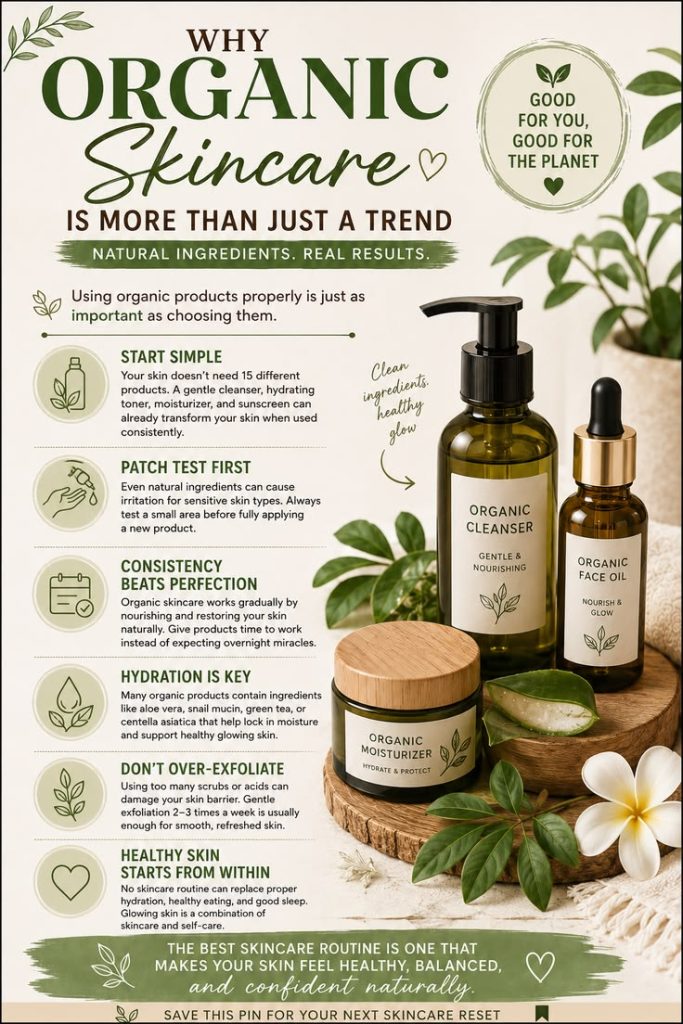
However, it is important to recognize that natural ingredients can still cause irritation or allergic reactions in some individuals.
Patch testing remains advisable regardless of product category.
Understanding Common Misconceptions
Natural beauty products offer many benefits, but several misconceptions deserve clarification.
Myth 1: Natural Always Means Better
Natural ingredients can be beneficial, but effectiveness depends on formulation quality, concentration, and suitability for individual skin needs.
Both natural and synthetic ingredients can play valuable roles in skincare.
Myth 2: Organic Products Are Automatically More Effective
Organic certification focuses primarily on ingredient sourcing and agricultural practices.
Product effectiveness depends on formulation, ingredient selection, and product design.
Myth 3: Natural Products Cannot Cause Irritation
Even botanical ingredients may trigger reactions in some individuals.
Examples include:
- Essential oils
- Fragrance compounds
- Certain plant extracts
Patch testing is always recommended.
The Role of Science in Natural Beauty
Modern natural beauty brands increasingly combine botanical ingredients with scientific research.
This approach allows manufacturers to create products that offer both:
- Natural ingredient appeal
- Evidence-based performance
The future of beauty increasingly involves combining nature and science rather than treating them as opposing concepts.
How to Choose Quality Natural Beauty Products
When selecting products, consider the following factors.
Review Ingredient Lists
Look for recognizable and relevant ingredients.
Research Certifications
Organic and sustainability certifications may provide additional information.
Consider Your Skin Type
Choose products appropriate for your individual needs.
Evaluate Brand Transparency
Brands that openly discuss sourcing and manufacturing often inspire greater consumer confidence.
Patch Test New Products
This helps identify potential sensitivities before widespread use.
Thoughtful product selection improves the likelihood of positive experiences.
The Future of Natural and Organic Beauty
The natural beauty market continues to evolve rapidly.
Emerging trends include:
Sustainable Packaging
Reducing environmental impact through innovative materials.
Biotechnology-Derived Ingredients
Creating effective ingredients through sustainable scientific processes.
Personalized Natural Skincare
Customized solutions tailored to individual needs.
Increased Ingredient Transparency
Providing consumers with more detailed information.
These developments are expected to further strengthen consumer interest in natural beauty products.
Natural Beauty and the Global Market
Natural and organic beauty products have become a significant segment of the global cosmetics industry.
Growth is being driven by:
- Consumer education
- Environmental awareness
- Wellness trends
- Sustainable purchasing habits
As demand increases, more beauty companies are expanding their natural product offerings.
Benefits Beyond Skincare
Natural beauty products often extend beyond facial skincare into categories such as:
Hair Care
Natural shampoos, conditioners, and treatments.
Body Care
Lotions, body oils, and cleansers.
Cosmetics
Natural foundations, lip products, and color cosmetics.
Personal Care
Deodorants, soaps, and wellness products.
This broad product range allows consumers to integrate natural options throughout their beauty routines.
Conclusion
The growing popularity of natural and organic beauty products reflects a broader shift toward transparency, sustainability, and mindful consumption. By incorporating plant-based ingredients, ethical sourcing practices, environmentally conscious manufacturing, and nutrient-rich botanical extracts, many natural beauty brands offer products that appeal to modern consumers seeking holistic approaches to beauty and wellness.
Brands such as Weleda, Dr. Hauschka, and Tata Harper have helped demonstrate how nature-inspired formulations can coexist with innovation and high-quality product development.
While natural and organic products are not automatically superior to conventional cosmetics, they offer unique advantages related to ingredient sourcing, sustainability, transparency, and consumer values. By understanding product labels, evaluating formulations carefully, and selecting products suited to individual needs, consumers can make informed choices that support both their beauty goals and their broader lifestyle preferences.
