Post
The Ultimate Guide to Choosing the Right Skincare Products
Jun
The Ultimate Guide to Choosing the Right Skincare Products
Introduction
The skincare industry has experienced tremendous growth over the past decade, offering consumers an overwhelming variety of products designed to cleanse, hydrate, protect, and improve the appearance of the skin. From cleansers and moisturizers to serums and sunscreens, selecting the right skincare products can be challenging, especially with countless brands promoting different ingredients and benefits.
Healthy skin is not achieved through trends alone. It requires understanding your skin type, identifying your specific concerns, and choosing products formulated with ingredients that support your skincare goals. Whether you’re looking to prevent premature aging, reduce acne, improve hydration, or maintain a radiant complexion, the right skincare routine begins with selecting products tailored to your unique needs.
Leading skincare brands such as La Roche-Posay, CeraVe, SkinCeuticals, The Ordinary, and Paula’s Choice have helped educate consumers about evidence-based skincare and the importance of ingredient-focused routines.
This comprehensive guide explores everything you need to know about choosing the right skincare products and building an effective skincare regimen for healthy, beautiful skin.

Why Choosing the Right Skincare Products Matters
Your skin is the body’s largest organ and serves as a protective barrier against environmental stressors.
Using suitable skincare products can help:
- Maintain skin health
- Prevent premature aging
- Improve hydration
- Protect against sun damage
- Reduce breakouts
- Support skin barrier function
On the other hand, inappropriate products may contribute to irritation, dryness, congestion, or sensitivity.
Understanding your skin’s needs is the first step toward making informed decisions.
Step 1: Identify Your Skin Type
Before purchasing any skincare product, determine your skin type.
Normal Skin The Ultimate Guide
Characteristics:
- Balanced oil production
- Minimal sensitivity
- Few blemishes
- Smooth texture
Individuals with normal skin can typically tolerate a wide variety of products.
Oily Skin
Characteristics:
- Excess shine
- Enlarged pores
- Frequent breakouts
- Increased sebum production
Look for lightweight, non-comedogenic formulations.
Dry Skin
Characteristics:
- Tightness
- Flakiness
- Rough texture
- Reduced oil production
Hydrating and barrier-supporting products are particularly important.
Combination Skin
Characteristics:
- Oily T-zone
- Dry or normal cheeks
- Mixed concerns
Products should address both hydration and oil control.

Sensitive Skin
Characteristics:
- Redness
- Irritation
- Reactivity
- Discomfort after product use
Gentle, fragrance-free formulations are often preferred.
Step 2: Identify Your Primary Skin Concerns
Different skincare goals require different ingredients and product types.
Common Concerns
Acne
Focus on ingredients that help manage congestion and blemishes.
Dehydration
Prioritize hydration and moisture retention.
Hyperpigmentation
Look for ingredients that support a more even skin tone.
Fine Lines and Wrinkles
Target collagen support and skin renewal.
Redness
Choose calming and barrier-supporting formulations.
Understanding your concerns helps narrow product choices effectively.
Step 3: Learn the Essential Product Categories
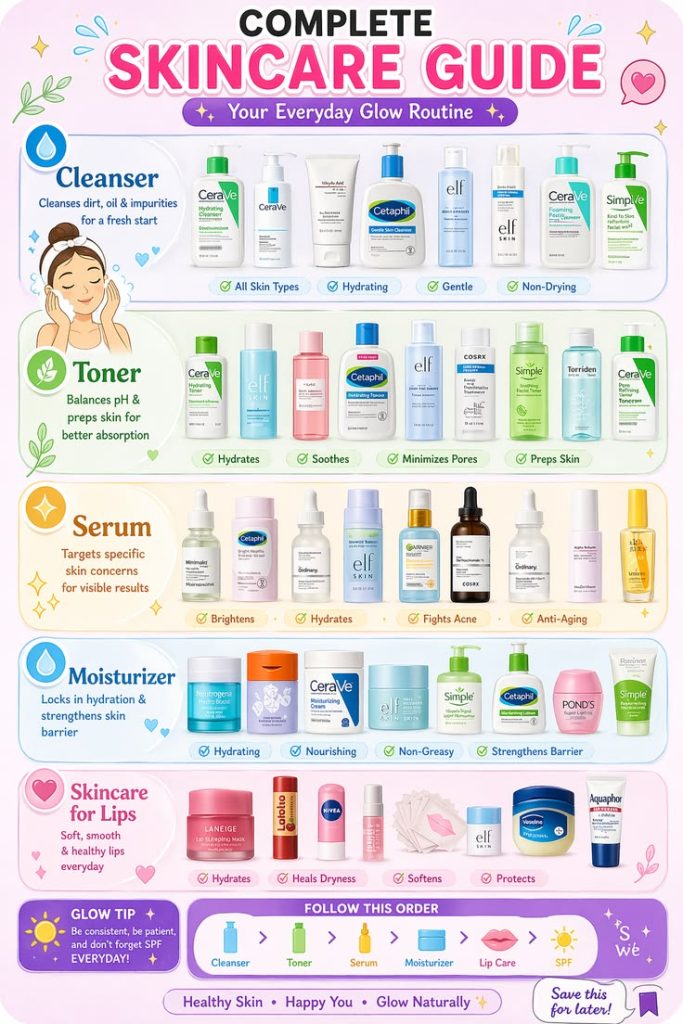
A successful skincare routine typically includes several core product types.
Cleanser
A cleanser removes:
- Dirt
- Oil
- Sweat
- Makeup
- Environmental pollutants
Types of Cleansers
Gel Cleansers
Often suitable for oily and acne-prone skin.
Cream Cleansers
Ideal for dry or sensitive skin.
Foaming Cleansers
Effective for removing excess oil.
Oil Cleansers
Popular for makeup removal and double cleansing routines.
Choose a cleanser that cleans effectively without stripping the skin.
Moisturizer
Moisturizers help maintain hydration and support the skin barrier.
Benefits
- Reduced moisture loss
- Improved comfort
- Enhanced barrier protection
Every skin type benefits from moisturizing, including oily skin.
Key Ingredients
- Ceramides
- Glycerin
- Hyaluronic acid
- Squalane
These ingredients help support healthy skin function.
Sunscreen
Daily sunscreen use is one of the most important steps in any skincare routine.
Benefits
- Protection from UV damage
- Reduced premature aging
- Lower risk of hyperpigmentation
- Support for overall skin health
Choose broad-spectrum protection and apply it consistently.
Step 4: Understand Key Skincare Ingredients
Ingredient knowledge helps consumers make more informed decisions.
Hyaluronic Acid
A powerful humectant that attracts moisture to the skin.
Benefits
- Hydration
- Plump appearance
- Improved comfort
Suitable for nearly all skin types.
Niacinamide
One of the most versatile skincare ingredients.
Benefits
- Oil regulation
- Improved skin barrier
- Reduced redness
- Enhanced skin tone
Niacinamide is widely used in modern skincare formulations.
Vitamin C
A popular antioxidant ingredient.
Benefits
- Brightening
- Environmental protection
- Support for collagen production
- Improved skin radiance
Vitamin C is commonly used in morning skincare routines.
Retinoids
Retinoids are among the most extensively studied skincare ingredients.
Benefits
- Improved skin texture
- Reduced fine lines
- Enhanced cell turnover
Beginners should introduce retinoids gradually.
Ceramides
Ceramides support the skin barrier.
Benefits
- Moisture retention
- Reduced irritation
- Improved resilience
They are particularly beneficial for dry and sensitive skin.
Salicylic Acid
A beta-hydroxy acid commonly used for acne-prone skin.
Benefits
- Exfoliation
- Pore cleansing
- Reduced congestion
It is especially effective for oily skin types.
Step 5: Build a Basic Skincare Routine
A simple routine often produces the best long-term results.
Morning Routine
Step 1
Gentle cleanser
Step 2
Treatment serum (if desired)
Step 3
Moisturizer
Step 4
Sunscreen
Consistency is more important than complexity.
Evening Routine
Step 1
Cleanser
Step 2
Treatment product
Step 3
Moisturizer
Nighttime routines focus on recovery and repair.
Avoid Common Skincare Mistakes
Using Too Many Products
Excessive layering can increase irritation.
Switching Products Frequently
Give products sufficient time to demonstrate results.
Ignoring Sunscreen
Sun protection remains essential regardless of weather conditions.
Over-Exfoliating
Excessive exfoliation may damage the skin barrier.
Following Trends Blindly
Choose products based on your needs rather than social media popularity.
These mistakes can undermine otherwise effective routines.
How to Read Skincare Labels
Understanding labels improves product selection.
Check For
- Active ingredients
- Concentrations (when available)
- Expiration information
- Usage instructions
Be Cautious Of
- Unrealistic claims
- Excessive fragrance
- Unsupported marketing language
Ingredient lists often reveal more than promotional materials.
The Importance of Patch Testing
Before introducing a new product, perform a patch test.
Benefits
- Identifies irritation risks
- Reduces adverse reactions
- Improves product safety
This step is particularly important for sensitive skin.
Choosing Products by Age Group
Teens
Focus on:
- Cleansing
- Moisturizing
- Sun protection
- Acne management if needed
20s and 30s
Consider:
- Antioxidants
- Preventative skincare
- Hydration
- Sunscreen
40s and Beyond
Prioritize:
- Barrier support
- Retinoids
- Hydration
- Collagen-supportive ingredients
Skincare needs often evolve over time.
The Rise of Personalized Skincare
Technology is increasingly influencing skincare product selection.
Emerging Trends
- AI-powered skin analysis
- Customized formulations
- Digital consultations
- Ingredient personalization
These innovations help consumers identify products that better match their unique skin profiles.
Why Consistency Matters More Than Expensive Products
Many consumers assume higher prices guarantee better results.
In reality, consistency often matters more than cost.
Successful skincare depends on:
- Appropriate product selection
- Daily use
- Patience
- Sun protection
Even simple routines can produce impressive results when followed consistently.
Benefits of a Well-Chosen Skincare Routine
Healthier Skin Barrier
Supports overall skin function.
Improved Appearance
Enhances texture and radiance.
Better Hydration
Maintains comfort and resilience.
Long-Term Prevention
Reduces future concerns.
Increased Confidence
Healthy skin often contributes to greater self-confidence.
These benefits make skincare an important aspect of personal wellness.
Conclusion
Choosing the right skincare products begins with understanding your skin type, identifying your primary concerns, and selecting evidence-based ingredients that support your goals. Rather than chasing every new trend, focus on building a consistent routine centered around cleansing, moisturizing, sun protection, and targeted treatments when necessary.
Brands such as CeraVe, La Roche-Posay, and The Ordinary have helped demonstrate that effective skincare does not need to be overly complicated. Success comes from choosing products thoughtfully, using them consistently, and adapting your routine as your skin’s needs evolve.
By following these principles, you can create a skincare routine that supports healthy, balanced, and radiant skin for years to come.
